
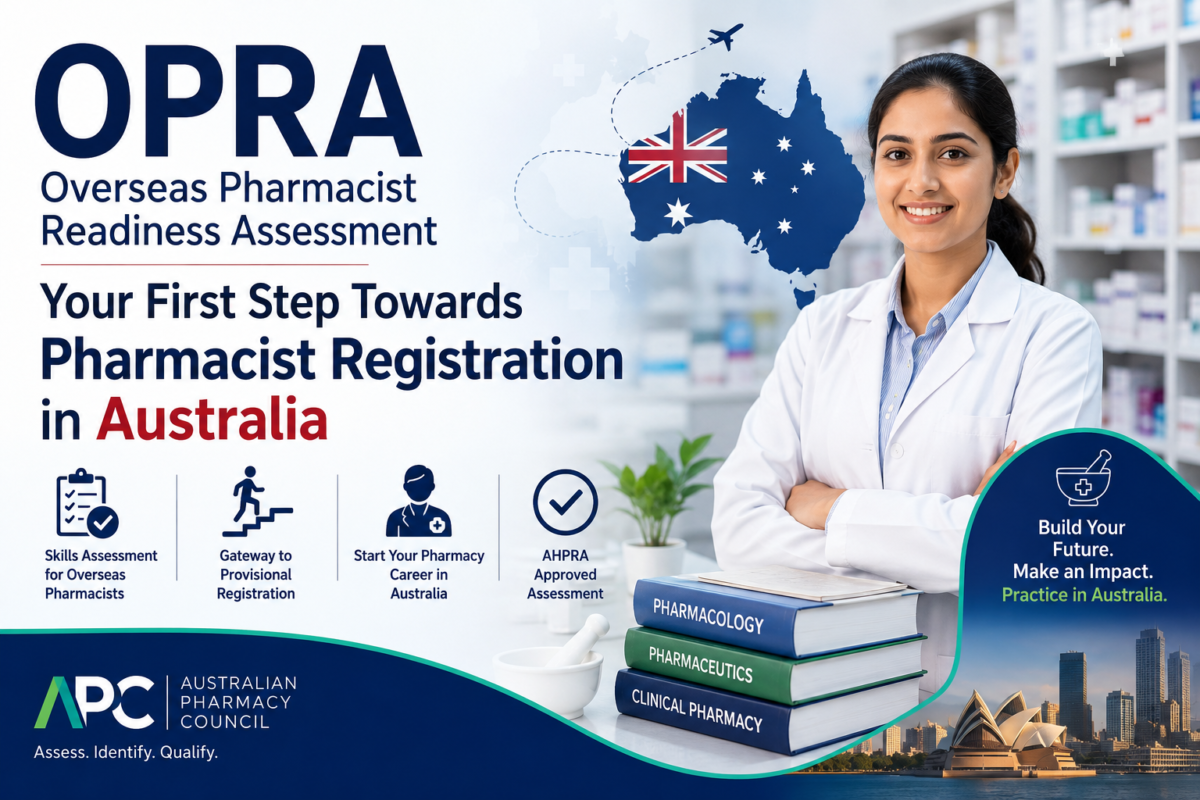
Australia has become one of the most preferred destinations for internationally qualified pharmacists seeking excellent career opportunities, professional growth, and an exceptional quality of life. Before overseas-trained pharmacists can begin the registration pathway, they must complete the Overseas Pharmacist Readiness Assessment (OPRA), an examination developed to assess the knowledge and readiness required for pharmacy practice in Australia. Understanding the examination process, eligibility requirements, and registration procedures is essential for every aspiring candidate.
What is the Overseas Pharmacist Readiness Assessment (OPRA)?
The Overseas Pharmacist Readiness Assessment (OPRA) serves as an important milestone in the Australian pharmacist registration pathway. Conducted as part of the Australian Pharmacy Council’s Knowledge Assessment Stream, the examination evaluates whether internationally qualified pharmacists possess the professional knowledge expected of entry-level pharmacists in Australia. It assesses pharmaceutical sciences, therapeutics, pharmacy calculations, patient care, evidence-based practice, clinical decision-making, and professional ethics. Success in this examination demonstrates that candidates have the theoretical foundation needed to proceed further in the registration process.
How to Register for the OPRA Exam
The first step for every internationally qualified pharmacist is to Register for the OPRA exam through the Australian Pharmacy Council. The Australian Pharmacy Council (APC) manages the knowledge assessment pathway for overseas pharmacists and provides detailed guidance regarding document verification, application procedures, examination schedules, and eligibility requirements. Candidates should carefully review all official requirements before beginning their application to ensure a smooth registration process.
Understanding OPRA Exam Eligibility Criteria
Before submitting an application, it is equally important to understand the OPRA Exam Eligibility Criteria for overseas pharmacists. Candidates must possess an approved pharmacy qualification that satisfies the Australian Pharmacy Council’s assessment requirements. Educational credentials, identity documents, and supporting evidence must be submitted according to APC guidelines. Meeting the eligibility criteria is the foundation of a successful application and allows candidates to proceed confidently through the assessment pathway.
What to Expect in the OPRA Examination
Once candidates register for the OPRA exam through the Australian Pharmacy Council, they gain access to an examination designed to evaluate both theoretical knowledge and clinical application. Unlike traditional university examinations that focus primarily on memorization, OPRA emphasizes critical thinking, patient-centred care, evidence-based decision-making, and the practical application of pharmacy knowledge. Therefore, candidates should adopt a structured preparation strategy that focuses on understanding concepts rather than rote learning.
OPRA Exam Syllabus
The Overseas Pharmacist Readiness Assessment (OPRA) covers a wide range of pharmacy disciplines, including:
- Pharmacology
- Medicinal Chemistry
- Pharmaceutics
- Therapeutics
- Pharmacy Practice
- Pharmacokinetics
- Pharmaceutical Calculations
- Patient Counselling
Candidates are expected to integrate knowledge from multiple disciplines while applying clinical reasoning to solve practice-based scenarios. This comprehensive approach ensures that future pharmacists are prepared to deliver safe and effective patient care within the Australian healthcare system.
Why Eligibility Verification Matters
Understanding the OPRA Exam Eligibility Criteria for overseas pharmacists helps candidates avoid unnecessary delays during the application process. Applicants should ensure that all educational qualifications, supporting documents, and identity verification requirements are completed accurately before submission. Reviewing the eligibility requirements early enables candidates to prepare documentation well in advance and reduces the possibility of application errors.
Effective Preparation Strategies for OPRA
Many candidates begin their preparation immediately after they register for the OPRA exam through the Australian Pharmacy Council. Early preparation provides sufficient time to revise core pharmacy subjects, strengthen weak areas, and develop confidence through regular practice. A structured study plan that includes concept revision, clinical case discussions, multiple-choice question practice, and mock examinations significantly improves examination readiness.
Preparing for the Overseas Pharmacist Readiness Assessment (OPRA) requires consistency, discipline, and access to reliable learning resources. High-quality study materials, experienced faculty, updated notes, revision sessions, and exam-pattern mock tests help candidates understand the expectations of the examination. Regular assessments also allow students to monitor their progress and improve their clinical reasoning and time management skills before the actual exam.
Stay Updated with APC Announcements
Another important aspect of preparation is staying updated with the latest information released by the Australian Pharmacy Council. Candidates who register for the OPRA exam through the Australian Pharmacy Council should regularly review official announcements regarding examination dates, registration timelines, and assessment policies. Following official guidance ensures that applicants remain informed throughout every stage of the registration process.
Build a Strong Foundation for Success
Meeting the OPRA Exam Eligibility Criteria for overseas pharmacists is only the beginning of a rewarding professional journey. Once eligible, candidates should focus on building a strong conceptual foundation rather than relying solely on question banks or short-term revision. The examination evaluates professional competency, making comprehensive preparation essential for long-term success.
OPRA: Your Gateway to Pharmacist Registration in Australia
The Overseas Pharmacist Readiness Assessment (OPRA) has become an important gateway for internationally qualified pharmacists aspiring to practice in Australia. It ensures that pharmacists entering the Australian healthcare system possess the knowledge, clinical judgement, and professional competence expected of healthcare practitioners. Successfully completing this assessment demonstrates readiness to continue along the pharmacist registration pathway.
Candidates who register for the OPRA exam through the Australian Pharmacy Council should remember that success depends on consistent preparation, systematic revision, and continuous self-assessment. Developing a realistic study schedule, practicing examination-style questions, and participating in regular mock tests can greatly enhance confidence and examination performance.
Similarly, understanding the OPRA Exam Eligibility Criteria for overseas pharmacists well before the application deadline allows candidates to complete document verification, educational assessments, and other formalities without unnecessary stress. Careful planning helps ensure a smooth application experience while allowing candidates to dedicate more time to academic preparation.
Conclusion
For internationally qualified pharmacists, the Overseas Pharmacist Readiness Assessment (OPRA) represents far more than an examination—it is the first major step toward achieving pharmacist registration in Australia. With proper planning, eligibility verification, systematic preparation, and timely application, candidates can confidently progress toward their professional goals.
If your dream is to build a pharmacy career in Australia, begin by understanding the complete registration pathway, ensure that you satisfy the OPRA Exam Eligibility Criteria for overseas pharmacists, and register for the OPRA exam through the Australian Pharmacy Council as soon as you become eligible. With dedication, expert guidance, and thorough preparation for the Overseas Pharmacist Readiness Assessment (OPRA), you can take a confident step toward becoming a registered pharmacist in Australia and building a successful international healthcare career.
